
About the program
Strong Foundations is an ACT Government program helping every public school to deliver a consistent approach to learning – including how we teach literacy and numeracy.
This program is enabling ACT public schools to work together, designing a shared approach to learning that is based on how we know students learn best.
Our shared approach will ensure ACT public schools are more consistent for students, families and teachers.
Strong Foundations will provide:
- evidence-informed and consistent teaching practices in every classroom
- common assessments, including a year 1 phonics test
- advice and resources for parents, to support their children with literacy and numeracy
- improved approaches to supporting students with different needs.
Strong Foundations at Southern Cross
1. Consistent Classroom Routines
Establishing and maintaining routines and expectations is crucial for effective classroom and school management, helping to ease cognitive load. Consistency in routines is paramount, ensuring that all learners understand and follow expected behaviours. This consistency is especially beneficial in high schools and colleges, where students move between classes and teachers throughout the day. The explicit teaching and review of routines and expectations in ACT Public Schools are underpinned by the Positive Behaviours for Learning (PBL) Framework. ACT Education Directorate, Learning and Teaching Policy (2026) |
|---|
At Southern Cross Early Childhood School, we know that when a child feels secure and knows what to expect, their brain is 'ready for learning.' By establishing clear, consistent routines, we reduce the 'cognitive load' for our learners, allowing them to spend less energy worrying about what comes next and more energy on learning and play.
What is 'Executive Functioning'?
From a young age, children are developing the mental tools they need to follow instructions, solve problems, and focus. These are called Executive Functioning skills, and these skills develop over time as the brain develops and grows (Early Childhood QLD, 2023). ‘Teachers can promote executive function development by incorporating daily routines in the classroom, which can help reduce the cognitive load required to perform tasks’ (page 3, Da Silva, 2023).
Our teachers are experts in scaffolding these skills through structured daily rhythms that grow alongside a child’s developing brain.
How we teach routines -
We don’t just expect children to know the routines; we explicitly teach them. This ensures every child feels confident and capable.
- Introduce: We discuss the why and the what so children understand the purpose.
- Model ('I Do'): Teachers demonstrate the expected behaviour clearly.
- Practice ('We Do'): We practice together! We provide extra support where needed and celebrate those small wins.
- Independence ('You Do'): Once confident, students take ownership of the routine, building their sense of agency and pride.
- Maintain: We reinforce these habits through praise, consistency, and daily practice.
What you will see in our classrooms -
Our environment is designed to be a 'silent teacher', guiding children through their day with visual and verbal cues.
- Visual Timetables: Every classroom displays a daily schedule. This helps children 'see' their day, reducing anxiety about transitions. Some children also use personalised mini-timetables for extra support.
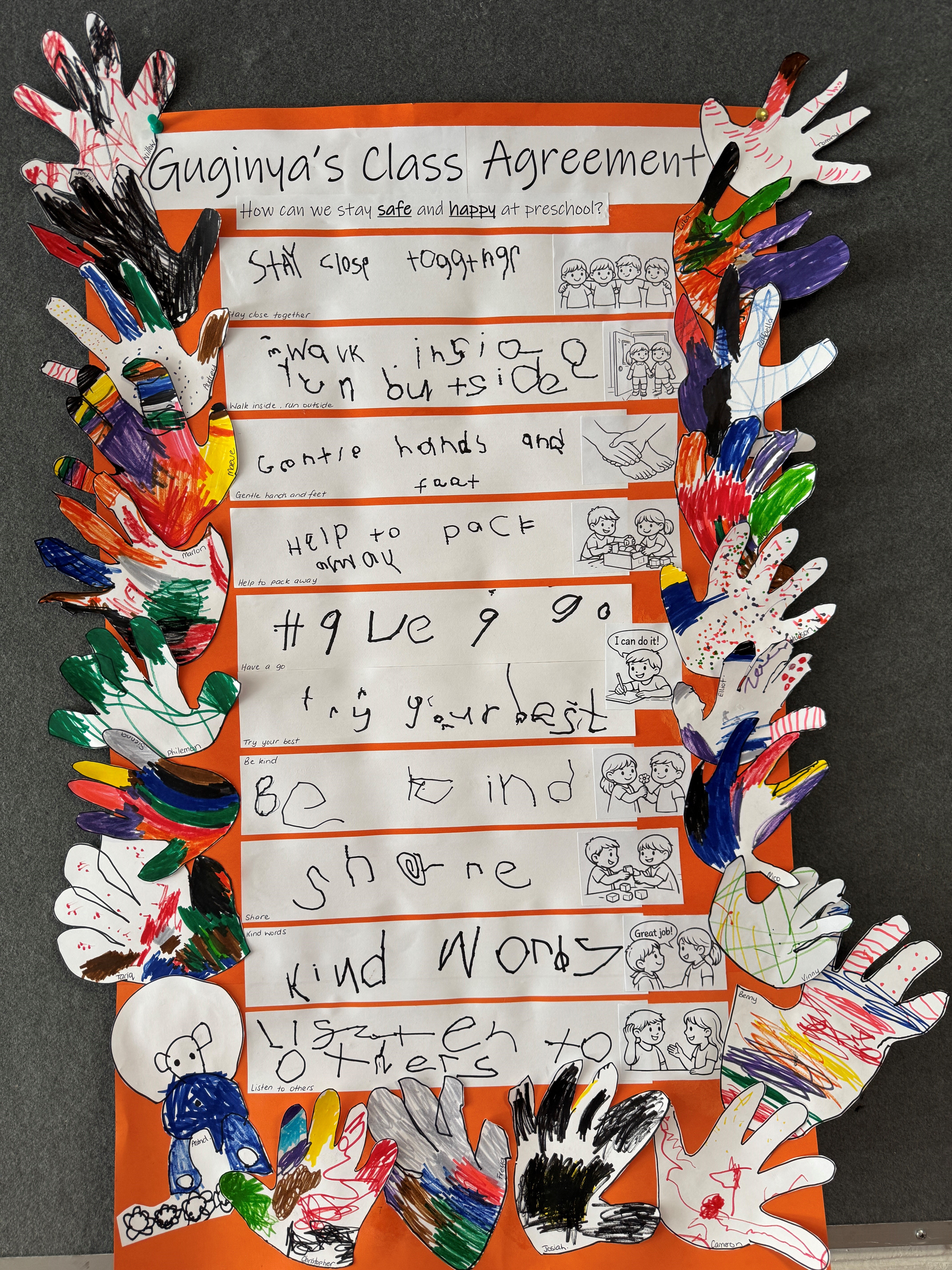
- Anchor Charts & Environmental Print: We use posters and charts (developed with the students) to remind them of classroom agreements and 'how-to' processes.
- Consistent Lesson Flow: Our teachers plan together so that whether a child is in Preschool or Year 2, the language and lesson structures feel familiar and safe.
- Clear Learning Intentions: We start lessons by explaining exactly what we are learning, so children feel a sense of purpose.
Parent Tip: You can mirror this at home by using a simple visual checklist for morning or bedtime routines. It’s a great way to build on the independence they are learning at school!
References:
https://uwo.ca/fhs/lwm/teaching/dld2_2023_24/DaSilva_DLD22023.pdf
https://earlychildhood.qld.gov.au/early-years/early-learning-at-home/care/executive-function-skills
https://www.edresearch.edu.au/sites/default/files/2023-12/teaching-routines-aa.pdf
2. Explicit Instruction
Explicit teaching is a systematic instructional approach in which teachers directly and clearly communicate concepts, skills, and strategies to students, break down complex tasks or concepts into smaller, manageable steps, and model the desired behaviours or skills. Through well organised sequencing of lessons, differentiated and clear guidance, students can transition from dependent to independent learners. Explicit teaching is effective when introducing new knowledge to students, using a gradual release of responsibility. ACT Education Directorate, Learning and Teaching Policy (2026) |
|---|
At Southern Cross Early Childhood School, we believe every child can experience success when learning is clear, logical, and connected. We use an evidence-based approach called Explicit Instruction to deliver the Australian Curriculum and maximise growth for every student.
What is Explicit Instruction?
Explicit instruction is a systematic and engaging way of teaching. Instead of leaving learning to chance, our teachers directly communicate concepts and strategies. Teachers break down complex tasks into manageable steps, ensuring students move confidently from dependent learners to independent achievers.
Why it works-
Research shows that students learn best when new information is built upon what they already know. By using a 'gradual release of responsibility' model, we reduce the 'cognitive load' (brain overwhelm), making learning accessible to everyone.
We focus on the idea that teaching is only successful when students have retained what they learned, not just when a teacher has delivered a lesson.
What it looks like at Southern Cross-
While the core of explicit teaching is consistent, the delivery is responsive to the unique needs of each child. In our classrooms, you will see:
- Setting up for success: Teachers use learning intentions and explicitly connect learning concepts with students’ prior knowledge.
- Modelling & 'Thinking Aloud': Teachers demonstrate new skills clearly, showing students exactly how to approach a problem.
- Guided and independent opportunities: Teachers work with the whole class, small groups, or one-on-one to provide tailored support.
- Scaffolding: We provide 'temporary supports'—like worked examples or anchor charts—that are gradually removed as a student gains mastery. Teachers also differentiate at all stages of learning.
- Checking for understanding: Teachers use strategies to continually check for understanding and will flexibly guide lessons to ensure the students are understanding the learning concepts.
- Assessment: Teachers use both formative (ongoing) and summative (end-of-unit) assessments to see exactly where a child is on their journey. This data allows our teachers to reflect on their teaching and decide the next steps for every student.
Resources used-
You may see teachers using a variety of resources to assist the learning process. You may see mini whiteboards, manipulatives, visuals and class books. Teachers also use the interactive whiteboard in strategic ways to enhance understanding.
Engagement-
Teachers use multiple ways to engage students during the explicit part of a lesson. You may see teachers using:
- Turn and talk – students turn and talk to a partner about the question or learning concept and ensures all students are in the learning (not just the student who has their hand up to answer the question).
- Positive reinforcement to provide cues to all students about the expectations or understanding of the learning concept.
- Catch groups – Teachers may ‘catch a small group’ prior to independent or small group learning to ensure they have understood the concept and the learning task.
- Small steps – Teachers will break a task down into smaller steps to ensure students follow and understand the task.
Tailoring to every learner-
Research tells us that explicit teaching is effective for all students, however there can be differences in the delivery of the explicit instruction (AERO, 2023). Because every child learns at a different pace, we adjust our explicit instruction by varying:
- Time: How long a student receives direct instruction.
- Repetition: Providing multiple opportunities to hear, see, and practice a skill.
- Guidance: The level of adult or peer support required before a student works independently.
Common misconceptions-
Is it just "chalk and talk"? No. While the teacher models the skill first, our classrooms are highly interactive. Students spend significant time talking, collaborating, and engaging in 'real-life' contexts to ensure they can use their new skills in the world around them.
4. Multiple Exposures and Guided Practice
Students need to be exposed to information on multiple occasions for learning to be effective in the long term. Through spaced, interleaving and retrieval practices, knowledge can be effectively transferred to long-term memory and applied to build new learning and deepen understanding. When students are provided with multiple exposures to content and engage in supported guided practice they can engage with concepts in different contexts, enabling them to apply their learning in a variety of ways. ACT Education Directorate, Learning and Teaching Policy (2026) |
|---|
At Southern Cross Early Childhood School, we recognise that deep, embedded learning is achieved over time. To ensure knowledge, concepts and skills are embedded for life and can be used in real-world contexts, we ensure every student experiences Multiple Exposures and Guided Practice.
Multiple Exposures is a high-impact teaching strategy where students are given many opportunities to engage with the same concept or skill over a period of time, rather than just once, to ensure mastery of the concept or skill.
By exposing students to new ideas on multiple occasions, we help them move knowledge from their short-term memory into their long-term memory that ensures students can use the knowledge and skill in their real lives. Research shows that most students need at least 3-4 guided and independent exposures to a new concept before it truly moves from their ‘working memory’ into their ‘long-term memory.’
Guided Practice is a teaching tool that provides students with scaffolded (or guided) opportunities to engage with new learning before moving on to independent practice. Teachers plan for guided practice as a part of the Gradual Release of Responsibility model, and they will often flexibly introduce supports during the lesson as they respond to the students’ needs.
Guided practice may include:
- Interactive modelling
- Breaking down a task into smaller steps
- Visual aids and/or manipulatives
- Support from an LSA
- Using simplified numbers and then building up to larger numbers, e.g. use numbers 1-10 first and then move to 1-20 etc.
How do we achieve this at Southern Cross Early Childhood School?
To make learning both effective and engaging, our teachers focus on four essential elements:
- Daily Review: We embed review and repetition into our daily structures, so students can practice key skills frequently. Environmental print is a tool that supports our teachers to achieve this.
- Intentional and Sequential Lesson Design: Teachers develop sequential planning documents to build on knowledge and skills over time. Teachers will also use formative assessment information to help guide the delivery of learning flexibly.
- Guided and Scaffolded Practice: We monitor skill development closely, knowing when to move to independent practise.
- Targeted Feedback: Teachers provide meaningful, timely feedback during learning to ensure misconceptions are addressed early.
What you might see in the classrooms
We pride ourselves on making learning visible and connected. When you visit our classrooms, you will see this in action through:
- Learning Cycles: Instead of 'one-and-done' lessons, we use learning cycles that allow children to explore a concept deeply over time.
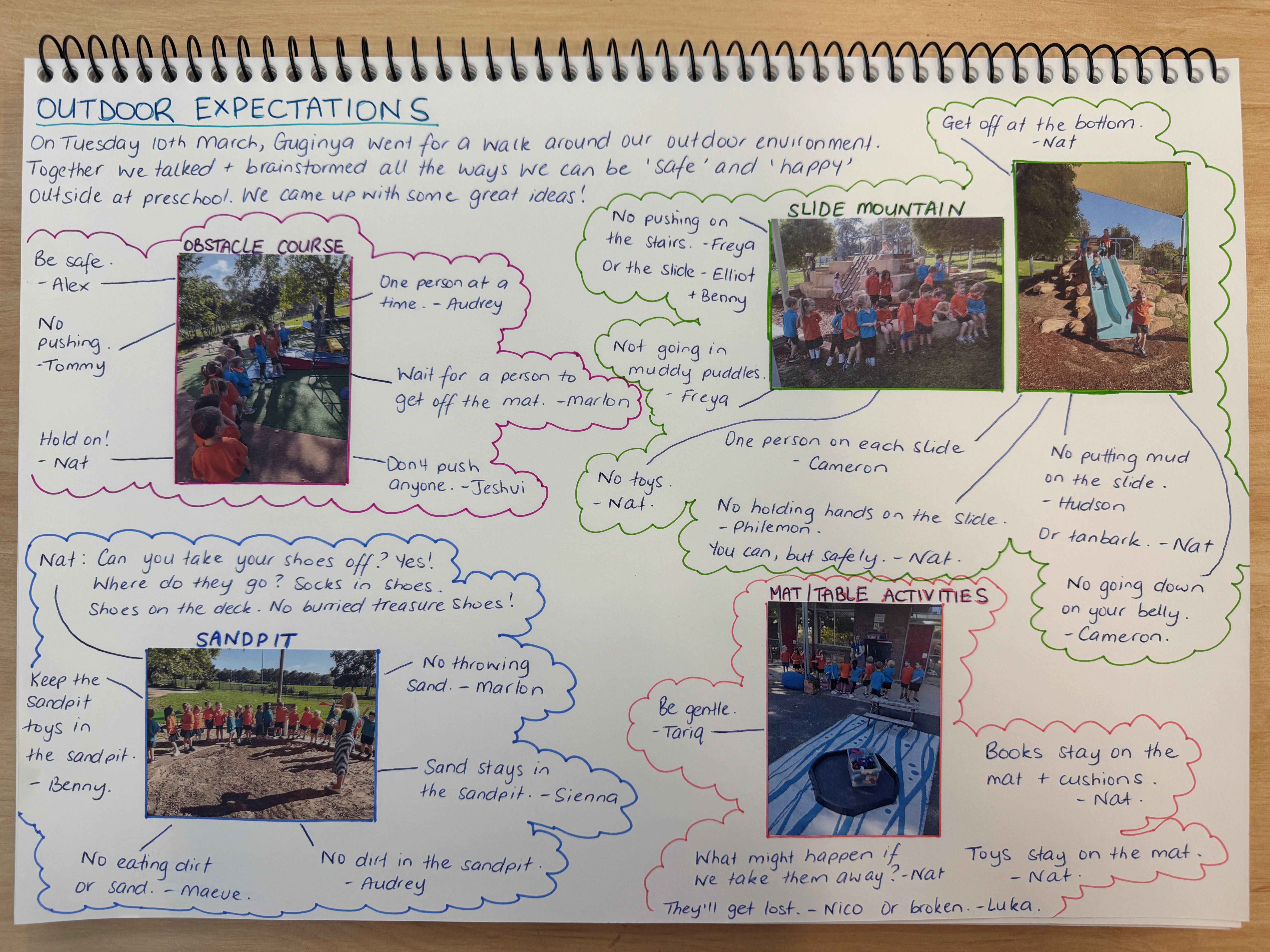
- Visual Learning Walls: We use large class journals and visual displays to capture our learning. These serve as a 'memory bank' that students can refer back to daily.
- Flexible Instruction: Learning isn’t one-size-fits-all. Our teachers modify daily routines to offer instruction in whole groups, small teams, or one-on-one settings. You will also see a variety of resources that teachers use to support learning.
- Connection to real-world contexts and across curriculum areas: We provide opportunities for the children to connect their learning to real-life contexts and across curriculum areas to deepen their understanding and to move the learning from short-term memory to long-term memory.
Our goal is to foster confident and successful learners who don’t just 'know' things for a test but understand them and apply them in life.